ADHD Counseling
ADHD treatment built on Acceptance and Commitment Therapy and practical follow-through skills, delivered inside a Christ-centered framework. For adults who know exactly what to do and cannot make themselves start, and for children ages 6 and up. In person in the Copperfield and Cypress area. Online across Texas.
You have known about it for two weeks. It has sat in the corner of your mind the whole time, quietly costing you. Now the house is asleep, the deadline is real, and suddenly your brain shows up. You will finish by 2 a.m., and you will promise yourself never to do this again.
You have made that promise before. You have bought the planner. You have downloaded the app. You have read the article about morning routines and felt hopeful for four days. People who care about you say you have so much potential, and every time they say it, it lands like a verdict.

You are not lazy, and you are not broken. ADHD is a difference in how the brain manages attention, time, and getting started. It is not a shortage of intelligence or love or faith. You already know what you should be doing. The gap is between knowing and starting, and no one ever taught you how to cross it.
Why the usual advice stops working
A task with no edge on it does not feel urgent, so it does not get your brain's attention. You wait. Not because you are careless, but because urgency is what finally switches the engine on. Then the deadline arrives, the pressure kicks in, and you get it done.
That is the trap. The scramble works, so it teaches the wrong lesson: waiting works. Meanwhile it costs you sleep, patience with the people you love, and the way you see yourself. Each rescue becomes another piece of evidence that you are the problem, and the shame makes the next task even harder to approach.
It is also why the usual advice has not worked. "Just try harder" is the one thing you have already tried, for years. Willpower is not the missing piece. Structure is, along with a way of treating yourself that does not run on shame.
How we treat it
ACT is our primary approach. For ADHD, we pair it with concrete planning, time management, and organizing skills, because insight alone has never been the problem. ADHD is rarely a shortage of knowledge. It is a gap between what you value and what you do in the moment, and shame widens that gap.
The research points the same direction. In a randomized trial of adults who were already taking medication and still struggling, those who received skills-based cognitive behavioral therapy improved more than those who received relaxation and education alone (Safren and colleagues, JAMA, 2010). The research on ACT for adult ADHD is newer, and the early results are promising.
In session, it comes down to three moves.
Notice it
You learn to spot the moment you tell yourself you will do it when you feel like it, and the pull of the more interesting thing sitting right beside it.
Name it
Boredom, overwhelm, dread, shame. You learn to name what is under the avoidance and to set down the word "lazy," which has never once helped you start.
Transform it
We tie each task to what you value as a spouse, a parent, a worker, or a believer, then give it an edge and a tiny first step so you can move before you feel ready.
ACT and the follow-through skills are the frame. They are not the whole picture. Your counselor will also look at sleep, stress, trauma, anxiety, and depression, which often travel with ADHD.
What we practice
ADHD counseling here is hands-on. Your counselor tailors the approach to you, and not every client uses the same tools. Many of the ones we draw on come from the Follow-Through Plan, a written system we developed. Four of them give you a feel for the work.
A short, written list of what you will not do. No new commitments without a 24 hour pause. No email before the first work block. Every no protects the yes you already made.
When something lands in your hands, you do one of four things with it: do it, schedule it, hand it off, or let it go. You do not set it down to decide later.
If it is 8:30 and I am sitting in the car, then I walk in and open the first file. Deciding ahead of time takes the decision out of the moment.
A ten-minute on-ramp. We shrink the start until it is almost embarrassing, because starting is the hard part and momentum does the rest.
Other tools include time blocking, making time and tasks visible, body doubling, and a plan for the days you slip, because shame is what feeds the wait cycle and self-forgiveness is a skill we practice on purpose.

The framework
Many Christians read ADHD as a character flaw. If I loved God more, or were more disciplined, I would not live like this. That is a second weight on top of the first one, and Scripture does not hand it to you.
Look at how often wisdom in the Bible looks like structure. Nehemiah had a great work in front of him and a list of invitations designed to pull him off it. He said no, and he said why.
I am carrying on a great project and cannot go down. Why should the work stop while I leave it and go down to you?Nehemiah 6:3
When Moses tried to carry everything himself, his father-in-law Jethro told him plainly that the work was too heavy for one person, and he showed him how to share it (Exodus 18:17-18). Jesus told his listeners to sit down and count the cost before they build (Luke 14:28). Planning, limits, and asking for help are not signs of weak faith. They are how faithful people get things done.
And when the day falls apart, the promise holds: God's compassions are new every morning (Lamentations 3:22-23). You can start again without keeping a ledger of every missed day.
Every counselor at Transformed Therapy is a licensed clinician who shares your faith, and we bring Scripture and prayer into session when you want them.
Faith is the foundation. Clinical work is how we build on it.
Holistic and solution focused
ADHD touches your whole life, so the work does too.
Unhooking from "I'm lazy," interrupting the scramble and shame loop, and building attention routines that fit the way your brain actually works.
Sleep and wake times, regular meals, movement, and an honest conversation about medication, which is a decision for you and your physician or psychiatric provider.
Stillness with God, soul rest, Scripture, short and doable prayer, grace for the days that fall apart, and accountability that comes from love instead of shame.
Solution focused means we agree on the target in the first sessions, choose the smallest tools that move you toward it, and measure whether they are working.
What to expect
We get the full story: your history, your symptoms, and whether ADHD fits the picture. Where it costs you the most, what you have tried, what has worked even a little, and whether a medical or psychiatric consult would help. You leave with a first small thing to try.
We name what you want your days to look like and choose two or three practical tools. We set up your first week together, so nothing depends on you remembering to plan.
Each session starts with what happened since the last one. We keep the tools that work, drop the ones that do not, and add the next one when you are ready.
A softer first step
You're Not Lazy is a short, printable starter written by our counselors. It walks you through the four basics and your first tools as two weeks of small steps. It is free to download, print, and share.
If you want the full system, with worksheets and a daily protocol to work through on your own between sessions, The Follow-Through Plan is available in our store.
You do not need either one to begin counseling. A guide is not meant to replace it, but it is a good way to begin, and it will show you quickly whether you want someone alongside you.
Waiting until things settle down is the wait cycle. One phone call is the whole first step. We will listen, answer your questions about insurance and scheduling, and match you with the counselor who fits what you are carrying.
Where we are
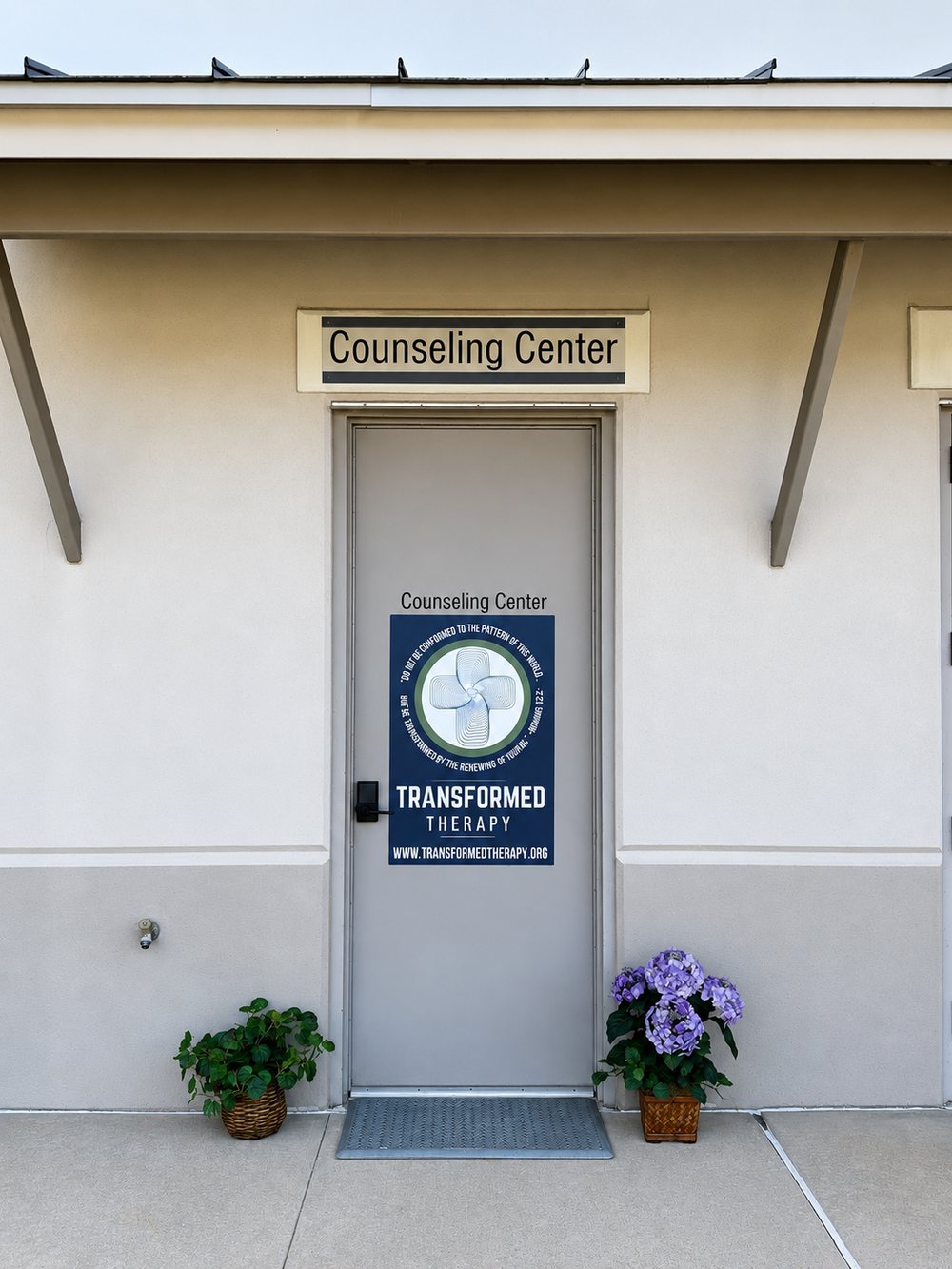
17100 West Road
Houston, TX 77095
Copperfield, Cypress, Tomball, Jersey Village, Katy, Fairfield, Bridgeland, and greater Northwest Houston. Telehealth across Texas.
Daytime and evening appointments available. Insurance accepted.
Notice it. Name it. Transform it.
If you are in crisis or thinking about harming yourself, call or text 988 to reach the Suicide and Crisis Lifeline, or go to your nearest emergency room. This page is educational and is not a substitute for an individual clinical evaluation.