Depression Counseling
Depression treatment built on Acceptance and Commitment Therapy and Behavioral Activation, delivered inside a Christ-centered framework. In person in the Copperfield and Cypress area. Online across Texas.
Everyone else is getting ready for church. You can hear the kids arguing about shoes. You are deciding whether you have enough in you to put on real clothes and smile at people for two hours.
You used to love Sunday. You used to love a lot of things. You cannot point to the day it changed. Nothing is wrong, exactly. Everything is just gray, and heavy, and a little far away.
You still show up. The work gets done. The kids get fed. Then the guilt arrives on top of it, because you have a good life and a God who loves you, and you cannot understand why you feel nothing when you pray.

Depression is not ingratitude, and it is not a verdict on your faith. It is a treatable condition, and it is common. According to the National Institute of Mental Health, an estimated 21 million American adults, 8.3 percent, had at least one major depressive episode in a single year.
You are not lazy, and you are not broken. You are worn down, and there is a way back.
If you are thinking about ending your life, call or text 988 now, or go to the nearest emergency room. You do not have to wait for an appointment.
Why the usual advice stops working
When you are depleted, pulling back makes sense. You cancel the dinner. You skip small group, just this week. You let the texts sit. You stay in bed a little longer, because maybe rest will fix it.
But withdrawal does not work like rest. Each time you pull back, you lose a little more of what used to refill you: people who know you, the satisfaction of finishing something, small pleasures, worship alongside God's people. Less comes in, so you feel worse, so pulling back makes even more sense.
There is a quieter version too. You lie awake trying to figure out what is wrong with you. It feels like problem solving. It is not. Rumination is withdrawal that happens inside your own head, and it keeps the low going longer.
That is the cruelty of depression. It takes away the very things that would help, then tells you they would not have helped anyway.
It is also why the usual advice has not worked. "Choose joy" and "pray harder" ask you to fix the inside first and wait to feel different. "Just get out of bed" points the right direction but asks for too much at once, so falling short becomes one more piece of evidence against you. You do not need to wait until you feel like it. You need to work from the outside in.
How we treat it
ACT is our primary approach. For depression, we pair it with Behavioral Activation, a structured method built on a simple finding: motivation tends to follow action, not the other way around. You do not wait to feel better before you reengage your life. You reengage in small, planned steps, and mood begins to follow.
The evidence is strong. In the COBRA trial, published in The Lancet in 2016, 440 adults with depression received either Behavioral Activation or cognitive behavioral therapy. Behavioral Activation did as well as CBT, and about two thirds of people in both groups saw their symptoms drop by at least half.
In session, it comes down to three moves.
Notice it
You learn to spot the moment depression starts making your decisions. "What's the point" stops being a verdict on your life and becomes a sentence depression produced.
Name it
Numbness, grief, shame, exhaustion. You learn to name what is there and make room for the heaviness without arguing with it, and without letting it set your schedule.
Transform it
We identify what you value as a spouse, a parent, a worker, a believer. Then we schedule small actions in that direction before you feel like it, small enough to do on a bad day.
ACT and Behavioral Activation are the frame. They are not the only tools we use. Depending on what you bring in, your counselor may also draw on cognitive behavioral strategies, rumination-focused work, sleep and routine rebuilding, grief work, and trauma-focused care when the depression is rooted in something that happened to you.
The framework
Many Christians carry a second weight on top of the depression: the belief that a real believer would not feel this way. You know you should be grateful. You know God is good. Knowing it has not lifted the fog, and now you feel like a failure as a Christian too.
Scripture does not ask you to pretend. The writer of Psalm 42 says his tears have been his food day and night. Psalm 88 ends in darkness, with no resolution, and God kept it in the book.
Look at what Jesus did in Gethsemane. He told his friends his soul was overwhelmed with sorrow to the point of death. Then he did not go off alone. He brought Peter, James, and John close and asked them to stay and keep watch with him. On the darkest night of his life, he moved toward people and prayed honestly.
Why, my soul, are you downcast? Why so disturbed within me? Put your hope in God, for I will yet praise him, my Savior and my God. Psalm 42:11
Notice what the psalmist does. He does not only listen to his downcast soul. He talks back to it. Martyn Lloyd-Jones built much of his book Spiritual Depression on that move, and it is close kin to what we teach in session: you can hear what your mind is saying without taking its word as final.
Every counselor at Transformed Therapy is a licensed clinician and a follower of Christ. We will pray with you if you want that. We will open Scripture with you if that is what serves the work. And if prayer feels like talking to the ceiling right now, you will not be shamed for it here. Spiritual dryness is one of the most common symptoms of depression. It is a symptom, not a report on where God is.
Faith is the foundation. Clinical work is how we build on it.
Holistic and solution focused
Depression is never only in your head. It settles into your sleep, your appetite, your energy, your relationships, and your prayer life all at once. Treating one piece and ignoring the rest is why people plateau. We work the whole system.
Interrupting rumination, unhooking from the harsh inner narrator, clarifying what you value, and practical problem solving for the circumstances feeding the low.
Sleep and wake times, morning light, food, the risks of alcohol, and movement. A 2024 review in The BMJ covering 218 trials found that walking or jogging, yoga, and strength training each produced moderate reductions in depression, and its authors suggested exercise be considered alongside therapy and medication as a core treatment. We also coordinate with your physician, because thyroid problems, medication side effects, and other medical issues can look like depression.
Lament, Scripture, stillness with God, confession, and community. We look honestly at where isolation, shame, or a picture of God as permanently disappointed in you is keeping you down.

Solution focused means we agree on the target in the first session and measure whether we are hitting it. We are not here to keep you in the chair for years.
What to expect
We get the full story. What the depression does, when it started, what it costs you, what you have already tried. We take a baseline measure so progress is a number and not a guess, and we ask directly about thoughts of not wanting to be here, because that question belongs in every first session. You leave with at least one small, specific step to take before you come back.
We name what you want your life to look like and work backward. We map an ordinary week to see where withdrawal has crept in. You and your counselor agree on specific targets, the approach we will use, and roughly how long it should take.
We re-measure every few weeks. If something is not moving, we change it rather than repeat it. We talk about the ending from the beginning, because the goal is your life back, not a standing appointment.
Depression will tell you to reach out once you have more energy. That is the withdrawal talking. One phone call is the whole first step. We will listen, answer your questions about insurance and scheduling, and match you with the counselor who fits what you are carrying.
Where we are
17100 West Road
Houston, TX 77095
Copperfield, Cypress, Tomball, Jersey Village, Katy, Fairfield, Bridgeland, and greater Northwest Houston. Telehealth across Texas.
Daytime and evening appointments available. Insurance accepted.
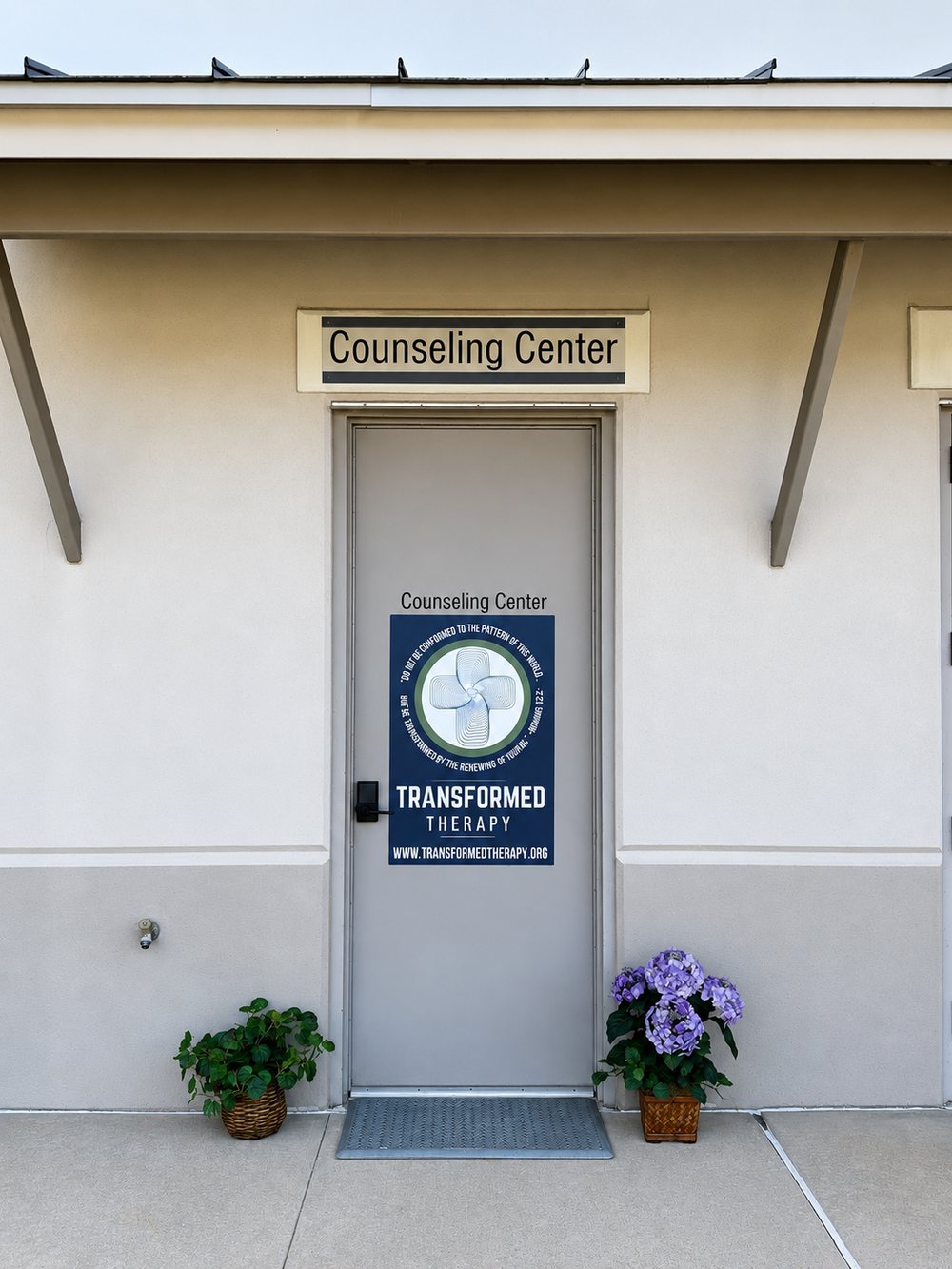
Notice it. Name it. Transform it.
If you are in crisis or thinking about harming yourself, call or text 988 to reach the Suicide and Crisis Lifeline, or go to your nearest emergency room. This page is educational and is not a substitute for an individual clinical evaluation.