Marriage Counseling
Serving Copperfield, Cypress, Towne Lake, Bridgeland, Katy, and Tomball from our office on West Road, and couples across Texas online. Talk to someone this week. We answer the phone.
You already know that. You've had this fight eleven times, and each time it ends the same way — one of you raising your voice, the other going quiet, and both of you lying in bed later wondering how you got here.
Maybe you've stopped fighting altogether, which somehow feels worse. You're polite. You coordinate schedules. You handle the kids. And you have not had a real conversation in months.
Maybe something happened — a betrayal, a discovery, a line that got crossed — and you can't tell yet whether this is the end of your marriage or the beginning of a different one.
Wherever you are on that spectrum, you are not the first couple to sit on our couch in that condition. And a great many of them are still married.
Why trying harder hasn't worked
Most couples who come to us are not really fighting about one thing. They are caught in a pattern that shows up no matter what the topic is.
One of you pursues. You bring it up again, press for an answer, follow your spouse into the next room, because the distance feels unbearable. The other withdraws. They go quiet, change the subject, or leave, because the pressure feels unbearable.
Here is the trap. Each of you is protecting yourself, and each protective move is exactly what sets the other one off. The more one pursues, the more the other pulls away. The more one pulls away, the harder the other pursues.
Researchers call this the demand-withdraw pattern. A 2014 review of 74 studies, covering more than 14,000 people, found that couples caught in it report lower satisfaction, less closeness, and poorer communication.
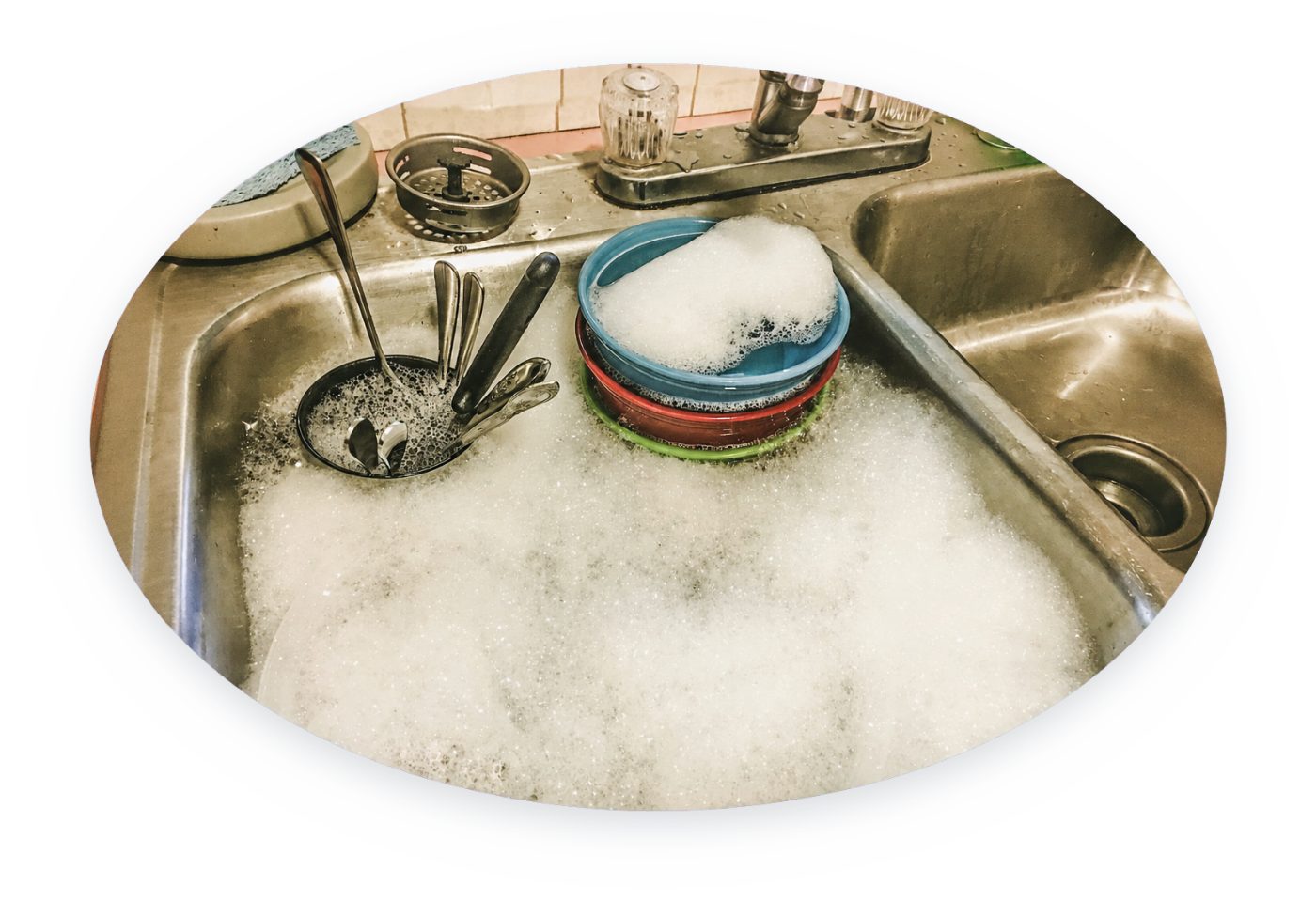
Some couples run the cycle loudly. Some run it so quietly that they end up as polite roommates. Either way, the dishes were never the point.
This is why "just communicate better" has not fixed it. Under that much pressure, no communication technique survives. So we work on the cycle itself: the pattern between you, and the reaction inside each of you that keeps feeding it.
Where we stand
Let us be plain about something many counseling practices won't say out loud: we are for your marriage.
Some therapists take a deliberately neutral posture — they treat staying together and separating as equally good outcomes and simply help you clarify which you prefer. That approach is not ours.

At Transformed Therapy, we begin with the conviction that your covenant is worth fighting for, that hard marriages can become good ones, and that the goal of the work is a marriage that is intact and genuinely well — not just legally preserved. We will not rush you toward healing and repair, but we may ask you to do hard things. And we will stay in the room with you while you do them.
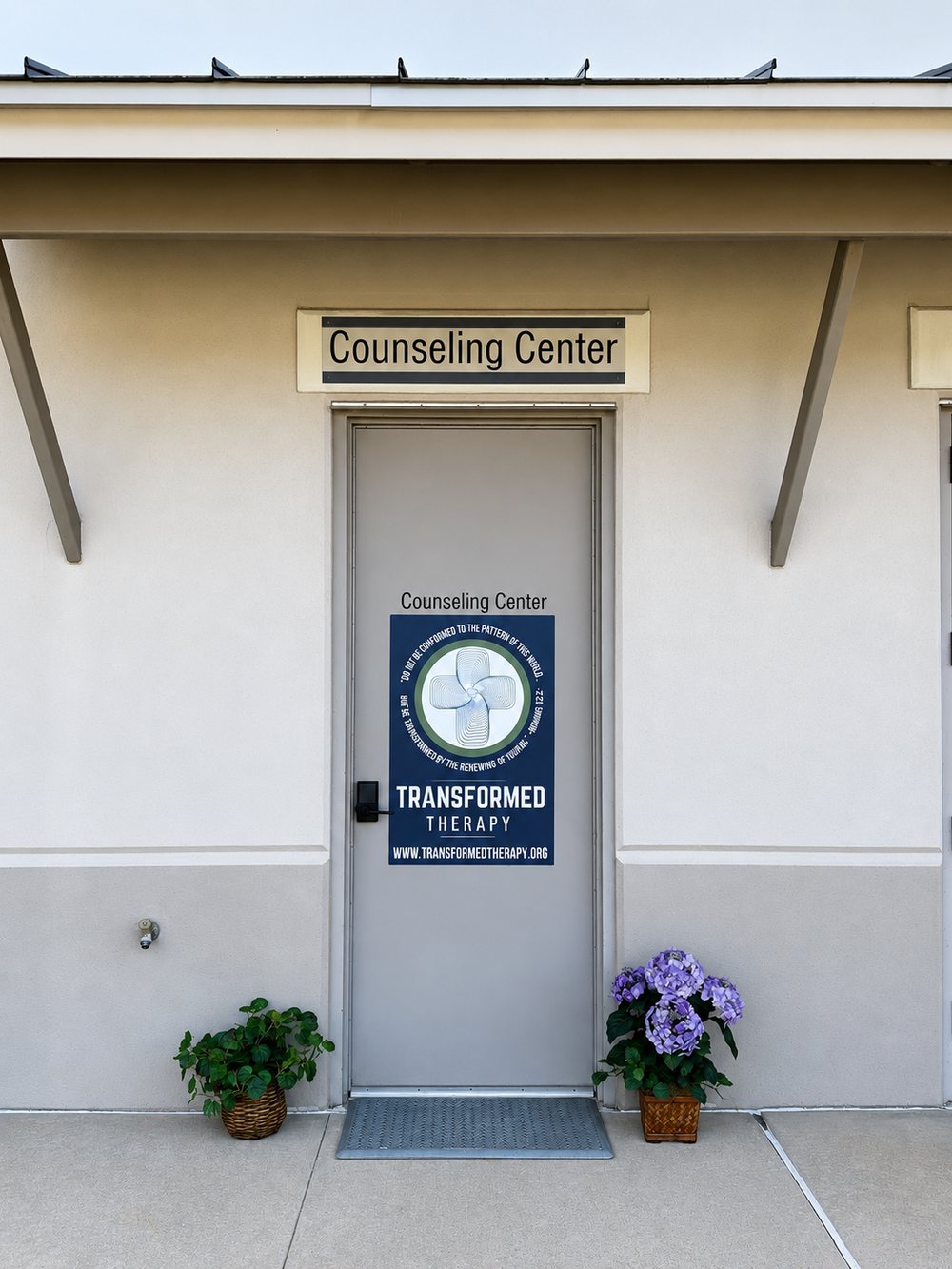
Do not be conformed to this world, but be transformed by the renewing of your mind. Romans 12:2
That verse is on our wall for a reason. Marriages don't heal because two people try harder at the same patterns. They heal when something underneath actually changes — how you see each other, how you handle your own reactivity, what you're willing to lay down. That's transformation, and it is slower and more real than advice.
An important exception. Our commitment to preserving marriages means making sure that abuse, coercive control, or danger is addressed before couples work begins. If you are being harmed, your safety comes first, and we will help you think clearly about it without pressure. If that's your situation, please tell us — you can say it privately, and we will treat it carefully. If you are in danger right now, call 911, or call the National Domestic Violence Hotline at 1-800-799-7233.
Any one of these is a good reason to come in. You do not need to be in crisis to qualify for help, and honestly, the couples who come in early get better results with less pain.
According to Dr. John Gottman, couples wait an average of six years of being unhappy before they get help. You don't have to.

Not married yet? Premarital counseling is one of the highest-return investments you can make, and it's very different work from crisis counseling. Call us and we'll tell you what it involves.
How we work
Marriage counseling fails when it's just a referee splitting the difference between two upset people. Our approach works on two levels at once: the pattern between you, and the reactivity inside each of you.
The Gottman Method grows out of decades of research observing real couples over time, one of the largest bodies of work on what distinguishes marriages that last from those that don't. In practice, that means we don't guess. We assess.
We look at the specific things the research says matter: how you begin difficult conversations, whether criticism has shaded into contempt, whether defensiveness and stonewalling have become your default moves, how much goodwill is left in the account, and whether you still know each other's inner world. Then we build repair skills where they're missing — softened start-ups, real listening, effective apology, and the ability to end a conflict without a casualty.

Not every problem in a marriage is solvable, and Gottman's work is unusually honest about that. A significant share of conflicts in every marriage are perpetual — rooted in personality and history. The skill isn't eliminating them. It's learning to hold them with humor and affection instead of gridlock.
Here is what most couples discover in the first month: the marriage problem and the personal problem are the same problem.
Your spouse says something. Within a second and a half, your chest tightens, an old story fires ("I'm being blamed again," "nothing I do is enough"), and you're defending yourself before you've decided to. No communication technique survives that. The skill has to be installed underneath it.
That's the work Acceptance and Commitment Therapy does. ACT helps you notice a thought as a thought rather than as reality, make room for a hard feeling without being run by it, and then — this is the part that changes marriages — choose your next move based on the husband or wife you want to be rather than on the emotion currently in the driver's seat.
ACT is fundamentally a values-based therapy, which makes it a natural fit for couples of faith. It asks what kind of spouse you're committed to being, and then builds the psychological flexibility to act like that person even when you're hurt, tired, or right.
And whatever else the situation calls for. We're not doctrinaire. Jeremy Sprott, LPC-S, has completed Level 1 and Level 2 Gottman Method training, and other counselors on our team bring their own evidence-based approaches. Depending on what you bring, we can include structured affair-recovery work when trust has been broken, mindfulness-based practices for chronic reactivity, and individual trauma work where a partner's history is driving the present. Several of our clinicians also work with men's issues and ADHD, both of which show up in marriages constantly and are frequently misread as not caring.
The framework
We are Christian counselors and licensed clinicians, and we don't think you should have to choose. Scripture, prayer, and forgiveness are welcome in the room.
What we won't do is hand you a Bible verse instead of treatment, weaponize your faith to pressure you into silence, or tell a hurting spouse to simply submit and pray harder.
Faith is the foundation. Clinical work and theory give us a workable framework for practical steps forward. The blend of sacred truth and solid clinical direction is the secret sauce.
What to expect
Call or book online. We'll listen to what's going on and match you with the therapist on our team who fits your situation.
We meet with you together, then briefly with each of you individually. This is where we find out what's really happening — including things that are hard to say in front of your spouse.
We tell you plainly what we see: your specific pattern, what's driving it, what's working in your favor, and what it will realistically take. You'll leave with a clearer understanding, first steps toward healing and growth, and a rough sense of how long it will take.
Weekly sessions to start. Skills practiced in the room, then homework between sessions — because the marriage gets better in your kitchen, not our office.
As things stabilize we move to every other week, then monthly check-ins, then out. The aim is a marriage that runs without us.

Most couples work with us for two to eight months. Deep betrayal recovery generally takes longer.
We'd rather tell you that now than sell you a six-week fix.
We hear this quite often, and it is not the dead end you think it is.
Start alone. Genuinely, start alone. A motivated partner working individually can change the dynamic of a marriage measurably, because you are half of every pattern in it. When one person stops taking the bait, stops defending, and starts responding from values instead of reactivity, the system has to reorganize around it. This is exactly the kind of change ACT is built to produce, and we've watched it pull reluctant spouses into the room more times than we can count.
A few things that help in the meantime: ask for one session, not a commitment. Frame it as something you need rather than something they need to fix. And if the objection is "therapy is anti-marriage" or "they'll take your side," this page is a reasonable thing to forward. It says out loud that we're for the marriage.
Free Marriage Quiz
Take this warm, practical marriage quiz from Transformed Therapy to uncover the primary relationship pattern affecting connection, communication, and conflict in your marriage.
One phone call is the whole first step. We will listen, answer your questions about insurance and scheduling, and match you with the counselor who fits your situation.
Or email info@transformedtherapy.org. Please don't include personal health information.
Where we are
Our main campus is right in the Copperfield corridor, an easy drive from Cypress, Towne Lake, Bridgeland, Fairfield, Tomball, and Katy. We hold early-morning, evening, and Saturday hours specifically so that working couples don't have to choose between their jobs and their marriage. We also offer secure online sessions to couples anywhere in Texas.
17100 West Road
Houston, TX 77095
Mon 7am–6pm
Tue 7am–9pm
Wed 7am–6pm
Thu 7am–5pm
Fri 7am–1pm
Sat 7am–1pm
Sun 3pm–6pm
By appointment only
Secure telehealth for couples anywhere in Texas. Insurance accepted.
Notice it. Name it. Transform it.
Transformed Therapy provides Christian marriage counseling, couples therapy, and individual counseling to Northwest Houston, including Copperfield, Cypress, Towne Lake, Bridgeland, Katy, and Tomball, and online across Texas. Learn more about our practice, our services, men's counseling, anxiety counseling, depression counseling, and church partnerships.
If you are in danger at home, call 911 or the National Domestic Violence Hotline at 1-800-799-7233. If you are in crisis or thinking about harming yourself, call or text 988. This page is educational and is not a substitute for an individual clinical evaluation.


